Refrigerators and freezers
A fridge that runs but will not cool usually starts with the condenser coils. In apartments, those coils hide underneath or behind the toe grille, matted with dust and pet hair that force the compressor to overwork. Then the tech listens for the evaporator fan behind the freezer wall, since a failed fan keeps the freezer cold while the fridge side warms up. Heavy frost on the evaporator coil points to the defrost system, so the heater, defrost thermostat and control board each get a continuity check with a multimeter. A clicking sound every few minutes with no hum often means a failed start relay or overload on the compressor.
Washers
Standing water in a washer usually traces back to the drain path. The tech clears the pump filter of coins, socks and hair ties, then tests the drain pump motor directly. If the machine will not start or spin, the lid switch on a top-loader or the door lock assembly on a front-loader is a common culprit. Loud banging during spin points to the suspension: worn shock absorbers, springs or a cracked spider arm on the drum.
Dryers
No heat in an electric dryer usually means a blown thermal fuse or a burned-out heating element, and no heat in a gas dryer often means a weak igniter or failed gas valve coils. A drum that sits still suggests a broken belt, while squealing or thumping points to worn drum rollers or the idler pulley. Here is the part people skip: a thermal fuse blows for a reason, and that reason is usually a clogged vent. In high-rises with long shared vent runs, the tech will check airflow at the exhaust before calling the job done.
Dishwashers
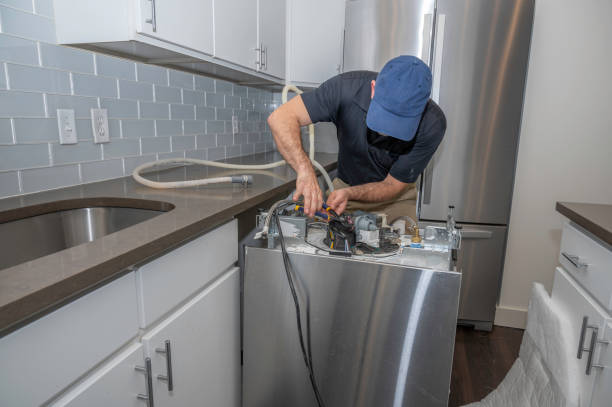
Water sitting in the bottom of the tub starts with the filter and drain hose, then the drain pump. If the unit hums but never fills, the tech tests the water inlet valve and its solenoid. Dishes coming out wet and cold suggest a failed heating element or high-limit thermostat.
Ranges, ovens and cooktops
When a gas oven clicks without lighting, the hot surface igniter has usually weakened and no longer draws enough current to open the safety valve. The tech checks that with a clamp meter, and may use a manometer to confirm gas pressure at the regulator. Electric ovens that heat unevenly often have a broken bake or broil element, and ovens that run hot or cold usually have a drifting temperature sensor, checked against the resistance chart on the tech sheet.
Microwaves
If the light and turntable work but food stays cold, the magnetron, high-voltage diode or capacitor may be at fault. A totally dead microwave often has a blown internal fuse triggered by a bad door switch. Never open a microwave yourself: the high-voltage capacitor can hold a lethal charge long after the unit is unplugged, and a trained tech discharges it safely before touching anything.